Sital Sasthi — The Celestial Wedding
Sital Sasthi is the most grand and vibrant festival of Sambalpur, celebrating the celestial wedding of Lord Shiva (as Sital Sasthi) and Goddess Parvati. The festival falls in May–June (the 6th day of the bright fortnight in the Hindu month of Jyestha) and spans 5 days of non-stop celebrations.
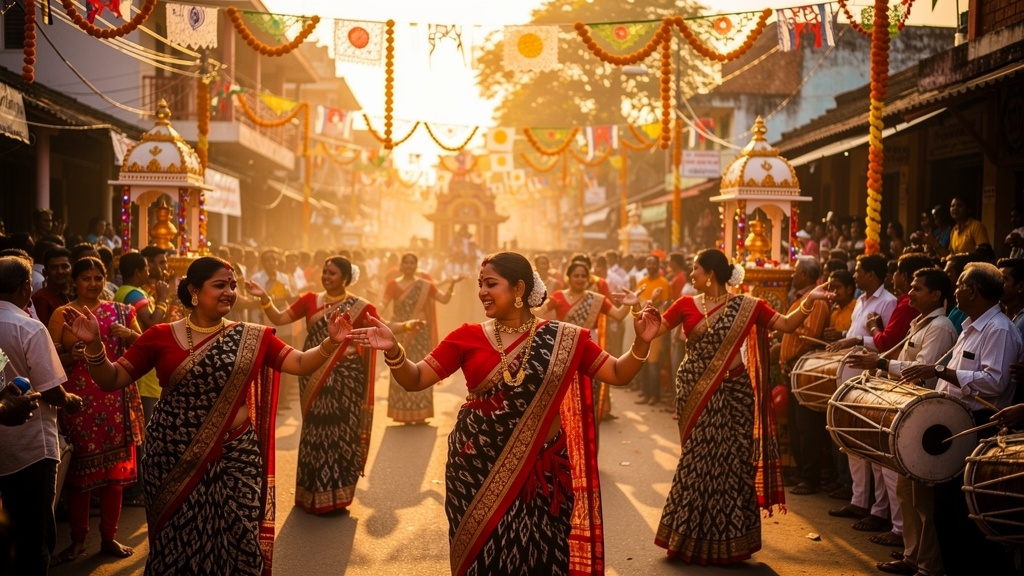
The highlight is the grand wedding procession where elaborately decorated palanquins carrying idols of the deities are taken through the city streets. Thousands of devotees join the procession, accompanied by traditional music, dancing, and colorful decorations.
During the festival, the entire city transforms into a cultural hub. Folk dance performances — including Dalkhai, Rasarkeli, and Karma dances — are held at various venues. Food stalls line the streets, offering local delicacies.
For travelers: This is the best time to experience authentic Western Odisha culture. Book accommodations well in advance as the city gets crowded during this period.
Nuakhai — The Harvest Festival
Nuakhai is the most important social and agricultural festival of Western Odisha, celebrated with great enthusiasm in Sambalpur. The name "Nuakhai" literally means "new food" — the festival marks the harvesting of new rice.
Celebrated a day after Ganesh Chaturthi (usually August–September), Nuakhai is a time for family reunions, feasting, and gratitude. The festival begins with Nuakhai Bhet — a tradition where younger family members visit elders to seek blessings.
Special dishes are prepared using the new harvest, and the community comes together for celebrations. Folk dances, songs, and cultural programs are organized across the city. The Nuakhai Juhar (exchange of greetings) is a beautiful tradition that strengthens community bonds.
Cultural significance: Nuakhai reflects the deep agrarian roots of Sambalpur's society. It's a wonderful time for travelers to experience the warmth and hospitality of the region.
Sambalpur Lok Mahotsav
The Sambalpur Lok Mahotsav is a mega cultural festival organized by the district administration to showcase the rich tribal and folk heritage of Western Odisha. Held annually over 3–4 days, usually in January–February, this festival brings together artists from across the region.
The festival features:
▸ Folk dance and music performances — Dalkhai, Rasarkeli, Karma, Chhau, and Ghumura dances
▸ Handloom and handicraft exhibitions showcasing Sambalpuri textiles and tribal art
▸ Food festival with traditional Odia cuisine
▸ Workshops and seminars on preserving indigenous culture
For travelers, the Lok Mahotsav offers a concentrated dose of Western Odisha's cultural richness in one venue. It's an excellent opportunity to interact with artisans, performers, and cultural experts.
Traditional Folk Dances
Dalkhai Dance
The most popular folk dance of Western Odisha, Dalkhai is performed by young women during festivals. Dancers move gracefully in Sambalpuri sarees to the beat of traditional drums like the dhol and nishan.
Rasarkeli Dance
A vibrant dance form performed during Sital Sasthi, depicting the divine love of Radha and Krishna. Known for its energetic movements and colorful costumes.
Karma Dance
Performed by the tribal communities of the region, the Karma dance celebrates nature and the changing seasons. Dancers form circles and move rhythmically around a sacred tree branch.
Cultural Calendar
Plan your visit around Sambalpur's vibrant festival calendar.